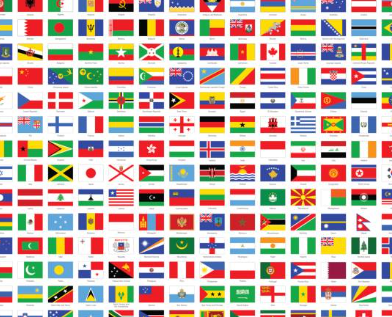
Europe speaks with many voices, the same does your website, or it should!.
Across borders, users search, read, and make decisions in their own language. Having a multilingual website isn’t just about translation, it’s about connection.
- Build trust and authenticity with international visitors
- Increase your search visibility in multiple languages
- Reach customers directly, not through translation tools
- Convert more visitors by speaking their language and culture
A multilingual website turns visitors into customers, and customers into ambassadors.
Search engines like Google need to understand your structure to serve the right language version to each user. And to distinguish language.
The key is to combine clean technical structure of your website with localized content.
Essential multilingual SEO elements:
URL structure: use separate folders for each language:
example.com/en/
example.com/da/
example.com/fr/
The tag hreflang: Tells Google which version is for which language or region (en, da, fr-FR, de-CH)
Translated metadata: titles, descriptions, alt texts, and structured data should match each language version
Sitemaps: include all language versions (get all of them indexed in Google Search Console)
Avoid auto-redirects: IP- or browser-based redirects, which confuse Googlebot
With correct hreflang and structure, Google recognizes translations as related pages — not duplicates.
Automatic translation tools can make a page multilingual in seconds. However, this is not authentic.
Machine translation clearly misses tone, context, and culture. It can lead to a disaster.
It can also damage your credibility and confuse your SEO signals.
Human translation means:
Culturally adapted content
Correct terminology and local idioms
Keyword research for each target language
Natural flow and brand consistency
AI can assist. But humans connect. <<<<<<<<
Professional translation ensures your message stays in a human voice, even in multiple languages.
Language carries culture.
The same message can sound inviting in one language and cold or confusing in another.
A successful multilingual website respects:
Tone and formality
Cultural references
Local currencies, measurements, and idioms
Visual layout differences (text expansion, RTL scripts, etc.)
This is especially important for tourism websites where potential visitors make emotional decisions based on trust and clarity.
When your content feels native, tourists choose you directly, without relying on intermediaries like booking portals or aggregators.
A French traveler searching for “family hotel near Hillerød” won’t necessarily find you — unless your content exists in French.
| Platform | Multilingual Support | SEO Control | Best For | Notes |
| Joomla | ✅ Built-in multilingual system | ✅ Strong native SEO & hreflang | Small to mid-size multilingual site | Menus, modules, and content are language-linked. |
| Drupal Umbraco |
✅ Advanced translation workflows | ✅ Enterprise-level control | Large organizations & NGOs | Every element is translatable; ideal for complex sites. |
| WordPress | ⚠️ Requires plugins (WPML, Polylang) | ⚠️ Plugin-dependent | Small sites with 2–3 languages | Works, but requires careful maintenance. |
| HTML | Manual setup | ⚙️ Limited contro | Static pages or microsites | Fast, but impractical for larger project. |
Joomla and Drupal are superior for structured multilingual websites, especially when SEO and consistency matter. WordPress can work, but only with multiple plugins and frequent updates.
HTML-based sites are fine for small landing pages, but not scalable.
At Nenolink, I build multilingual websites using Joomla with Nicepage design templates.
This combination provides:
Built-in multilingual structure — no plugins required
SEO-ready URLs and metadata per language
Fast, responsive design optimized for every screen
Simple content management for clients
Easy scaling if you add new languages later
Joomla speaks multiple languages natively — Nicepage makes it beautiful.
As a translator, linguist, and web content specialist, I help you build multilingual websites that perform — both for users and for search engines.
My services include:
Multilingual SEO strategy and keyword research
Professional human translation of web content
Website setup and structure in Joomla & Nicepage (Provider: Simply)
Cultural adaptation and localization for European audiences
Technical configuration (hreflang, metadata, sitemaps)
Ongoing support for content updates and SEO monitoring
From text to technology — I help your website speak naturally in every language that matters to your customers. Nenoweb.com
My own websites like nenoolink.com are made this way.
Europe is multilingual. Your website should be too.
Whether your audience is local, regional, or international, speaking their language is the first step to being found — and trusted.
Let’s create a multilingual web experience that connects cultures, grows visibility, and strengthens your brand.
Automatic translation can be fast, but it often misses cultural nuances, tone, and local context. Human translation ensures that your content resonates with your target audience, maintains brand voice, and avoids misunderstandings.
From marketing slogans and legal texts to technical manuals and tourist information, professional translators adapt each message to the local culture, ensuring clarity, accuracy, and trust across languages.